SCF Microcellular Injection Mold – Custom Design & Manufacturing | SINOMOULD
Microcellular Foam Injection Molds Custom Design & Manufacturing | SINOMOULD How does a mold determine the success or failure of a microcellular foam part? With

Mucell microcellular foaming technology is a physical foaming process that uses supercritical fluid (such as nitrogen or carbon dioxide) to form uniform micron‑sized cells during injection molding. Compared with conventional injection molding, it significantly reduces part weight, minimizes warpage, improves dimensional stability, and shortens cycle times. However, the global adoption of Mucell technology faces challenges such as complex processes, difficult commissioning, and poor surface quality.
As a deep researcher and application promoter of Mucell technology, DKM holds a unique position in the global technology landscape. Compared with other technology providers worldwide, DKM distinguishes itself in 3 key dimensions:
Most technology providers only focus on equipment integration or chemical blowing agent supply. DKM not only masters the core manufacturing of physical foaming equipment but also deeply investigates the coupling relationship between material properties, mold design, and molding processes.
Unlike the standardized, remote technical support offered by foreign suppliers, DKM has established a localized “strong service support team” that emphasizes on‑site assistance and implementation—truly solving the “last mile” problem of technology adoption.
DKM provides not just individual machines but complete turnkey solutions, including machine selection (from 650T to 4000T and custom models), gas injection systems, mold modification recommendations, and automated production lines.
It is precisely this research‑driven, application‑oriented differentiated strategy that has enabled DKM to successfully promote Mucell technology across multiple high‑precision industries.
The widespread adoption of Mucell technology in the injection molding industry stems from its ability to resolve the classic “efficiency, quality, cost” dilemma of conventional molding. DKM transforms this theoretical advantage into practical productivity through its strong implementation capabilities.
The new energy vehicle industry increasingly demands lightweight, integrated, and high‑strength components. DKM has built a dedicated service support team for this sector to ensure that Tier 1 injection molding suppliers can achieve mass production with microcellular technology.
In practice, DKM’s technical team works directly at the supplier’s production site, assisting in adjusting in‑mold pressure, optimizing gas injection volume, and injection speed. This hands‑on approach shortens process commissioning—which would otherwise take months—to just weeks, significantly reducing trial‑and‑error costs for automotive parts manufacturers and ensuring stable mass production of large structural components such as battery pack housings and door panel modules.

Medical imaging equipment housings—for brands such as Philips, GE, and Siemens—demand high dimensional stability, stress‑crack resistance, and flame retardancy. Conventional injection molding of large medical housings often introduces high residual stress, leading to cracking over time.
DKM’s Mucell technology plays a critical role here. The extremely low residual stress of microcellular molded parts significantly improves durability under demanding conditions. DKM’s technical support spans the entire process—from mold design review and trials to mass production assistance—ensuring these high‑value medical housings achieve excellent mechanical properties while meeting strict visual appearance standards.
In the white goods sector, cost control and yield are key competitive factors. Responding to the trend toward larger and thinner‑walled home appliance products, DKM provides customized Mucell solutions.
Whether for washing machine drums or air conditioner fan blades, DKM’s technical team helps appliance suppliers master post‑foaming packing optimization through systematic training and on‑site production support. This effectively eliminates sink marks and improves surface flatness. DKM’s approach emphasizes not just selling equipment, but also delivering services and standards—this comprehensive support has accelerated the adoption of Mucell technology across the home appliance industry.
To meet the diverse needs of different industries, DKM offers a full range of standard machines and customized services. Currently, DKM’s main Mucell‑dedicated models focus on clamping forces from 650T to 4000T—covering the majority of large deep‑cavity structural parts, automotive interior and exterior components, and logistics containers.
For special application scenarios—such as precision electronic connectors requiring smaller tonnage, or extra‑large logistics pallets needing capacities beyond 4000T—DKM provides strong non‑standard customization capabilities. We can tailor the microcellular injection unit to perfectly match the product’s projected area, wall thickness, and material fluidity, ensuring optimal integration of gas injection and melt plasticizing.
Despite its advantages, Mucell technology has long faced two major challenges: surface swirl marks or gas streaks (caused by cell rupture), and fiber blooming when using reinforced plastics (long carbon fiber / long glass fiber). DKM has solved these industry pain points by deeply integrating Mucell with high‑gloss injection molding (rapid heat‑cycle molding).
In conventional Mucell molding, cell rupture at the cavity surface leads to surface defects. DKM’s high‑gloss technology uses rapid mold temperature switching—maintaining a high temperature during filling to ensure perfect replication and flow, then rapidly cooling—to form a dense solid layer on the part surface. This solid layer effectively seals internal bubbles, fundamentally eliminating surface cell rupture and enabling microcellular parts to achieve a high‑gloss appearance.
Long carbon fiber (LCF) and long glass fiber (LGF) tend to separate from the melt and surface during injection, affecting appearance and feel. DKM’s combination of high‑gloss mold technology with Mucell’s expansion pressure uses the “expansion filling” effect to firmly encapsulate fibers within the core layer. At the same time, the high mold temperature reduces fiber orientation differences during flow, completely eliminating fiber blooming and giving interior parts both lightweighting and premium surface quality.
DKM’s integrated technology is more than a simple process overlay. By optimizing the flow path of the high‑gloss heating medium and the foaming agent dosage, DKM significantly reduces cycle time. Under the premise of maintaining a uniform microcellular structure, DKM makes Mucell processing easier, faster, and more efficient—raising overall yield from around 80% with conventional processes to over 95%, delivering substantial economic benefits to customers.
New energy vehicles impose stringent, multi‑dimensional requirements on plastic parts, especially structural components, functional parts, and interior/exterior trim. DKM’s Mucell technology fully addresses these demands:
The internal cell structure achieves 8–15% weight reduction (or even higher) without sacrificing rigidity. For EVs, where range is critical, this directly translates to cost savings.
Closed cells blunt stress concentration at crack tips. With proper process control, microcellular parts can exhibit better fatigue strength and impact toughness than conventional injection molded parts—crucial for structural components like battery housings subjected to dynamic loads.
Microcellular molding reduces clamping force requirements (typically by 30–50%), allowing smaller machines to produce larger parts while saving energy. Material savings and cycle time reduction directly lower per‑part cost.
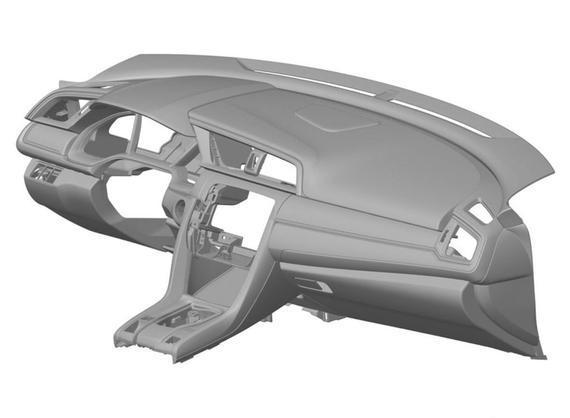
As noted, with the integration of high‑gloss technology, DKM’s Mucell process enables high‑end materials such as long carbon fiber to be readily used in instrument panels, door panels, and other interior components. This not only replaces metal with plastic but also imparts unique technical textures and electromagnetic shielding functionality.
DKM’s research into Mucell microcellular foaming technology has moved beyond pure equipment manufacturing into an era of deep integration covering process development, material adaptation, mold optimization, and mass‑production support. By merging Mucell with advanced molding technologies such as high‑gloss injection molding, DKM has not only overcome the surface‑defect challenges of traditional microcellular foaming but also significantly lowered the barrier to adoption—bringing this technology from the laboratory to large‑scale industrial application.
Looking ahead, as global “dual carbon” goals advance and new energy vehicles push for extreme lightweighting, Mucell technology will see even broader opportunities. With its deep expertise in automotive, medical, and home appliance sectors, coupled with strong custom equipment capabilities and on‑site service teams, DKM is well positioned to continue leading innovation in microcellular foaming. In the future, DKM will drive Mucell technology into more applications—high‑performance engineering plastics, biodegradable materials, and ultra‑large components—providing the global manufacturing industry with more competitive and sustainable injection molding solutions.
Microcellular Foam Injection Molds Custom Design & Manufacturing | SINOMOULD How does a mold determine the success or failure of a microcellular foam part? With
Microcellular Foam Molding Technology – Industry Applications Microcellular foam molding technology has long moved beyond the laboratory and is now a mature manufacturing solution globally.