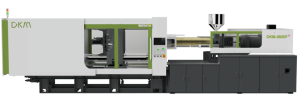
Imported Injection Molding Machines vs Domestic Injection Molding Machines: What Are the Gaps? How to Choose?
The choice of injection molding equipment determines production stability, product precision and cost. Imported machines occupy the high-end market with technical advantages, while domestic machines rise with cost performance; their differences need to be matched with enterprise needs.
Core Gaps Between Imported and Domestic Injection Molding Machines
Core Performance: Differences in Precision and Efficiency
●Injection precision: Imported machines have a repeat precision of ±0.1%~±0.3%, suitable for high-precision and complex products; domestic machines are mostly ±0.3%~±0.5%, and mid-to-high-end models can reach ±0.2%, meeting conventional needs.
●Production efficiency: Imported machines have more precise plasticizing and cycle control, with efficiency 10%~20% higher than ordinary domestic machines; mid-to-high-end domestic models are close in efficiency but need improvement in high-load stability.
Manufacturing Process: Gaps in Material and Details
●Core components: Imported machines use high-quality alloy for screws and barrels, with a service life of 8~10 years; domestic mid-to-low-end models use ordinary materials, with a service life of 5~7 years, and high-end models can approach imported levels.
●Detail control: Imported machines have low noise (≤65dB) and few failures; domestic mid-to-low-end models have a noise of about 70dB, prone to slight leakage after long-term operation.
Stability and Failure Rate: Differences in Long-Term Operation
The average trouble-free operation time of imported machines is 8000~10000 hours, suitable for 24-hour high-load production; domestic machines are mostly 5000~8000 hours, with slightly higher failure rate under high load.
Technological Innovation: Intelligence and Customization Capabilities
●Intelligence: Imported machines have advanced intelligent control systems, supporting automatic adjustment and remote monitoring; domestic mid-to-high-end models have basic intelligent functions, but there is a gap in response and algorithm precision.
Customization: Imported machines can provide mature personalized schemes; domestic machine customization is mostly conventional adjustment, and schemes for high-end special needs need improvement.
Cost and After-Sales Gaps Between Imported and Domestic Injection Molding Machines
Cost Input: Balance Between Pre-stage and Post-stage
●Purchase cost: The price of imported machines is 1.5~3 times that of domestic machines of the same specification (4~5 times for high-end), with high initial investment; domestic machines are 30%~60% cheaper, suitable for small and medium-sized enterprises.
●Operation and maintenance cost: Imported machine parts are expensive with long procurement cycle; domestic machine parts have high cost performance, easier to purchase and replace.
After-Sales Guarantee: Response Speed and Service Convenience
●Imported machines: Professional after-sales technology but slow response (usually more than 72 hours) and high service cost; domestic machines have fast response (24~48 hours) and more convenient service relying on localization advantages.
How to Choose: Match Enterprise Needs
Equipment selection does not need to blindly pursue high-end; the core is to match product needs, capital strength and production scale, which can be divided into three scenarios:
Scenarios for Prioritizing Imported Injection Molding Machines
●Producing high-precision, complex products (such as medical and electronic accessories); needing 24-hour continuous high-load production; sufficient funds, pursuing long-term stability and low failure rate.
Scenarios for Prioritizing Domestic Injection Molding Machines
●Producing conventional products (daily necessities, packaging parts); limited capital budget; moderate production load, acceptable conventional maintenance; pursuing high cost performance and convenient after-sales service.
Compromise Choice: Mid-to-High-End Domestic Models
●Medium product precision requirements, needing to balance efficiency and cost; medium funds, hoping to balance initial investment and long-term use effect; acceptable minor maintenance, pursuing both cost performance and stability.
Summary
The core gap between imported and domestic injection molding machines is the balance of “precision, stability and cost”: imported machines excel in high-end performance and long-term stability, while domestic machines win in cost performance and localized services. The core of enterprise selection is to combine their own products, funds and production needs, rather than simply judging advantages and disadvantages.