Injection Molding of Paint Buckets
How to Solve Bucket Mouth Deformation and Poor Sealing?
In the paint packaging field, the precision and sealing of the bucket mouth directly determine product safety during transport and storage. However, many manufacturers frequently encounter fatal defects such as out‑of‑tolerance ovality of the bucket mouth and poor snap‑fit of the sealing ring during paint bucket injection molding. This article systematically analyzes the root causes and provides a full‑course one‑stop paint bucket solution covering process to equipment.
I. Causes of Bucket Mouth Deformation in Paint Bucket Injection Molding
During paint bucket injection molding, mouth deformation is rarely caused by a single factor; it is usually the combined result of thermodynamics and mould structure:
- Uneven cooling and differential thermal shrinkage: The bucket mouth is often thicker than the side wall. If the mould cooling channels are poorly designed, the mouth area remains at a higher temperature, leading to greater post‑cooling shrinkage than other areas, resulting in ovality or warpage.
- Premature demolding and unbalanced ejection: Early mould opening to shorten cycle time—before the melt has formed a sufficiently rigid skin—causes the bucket mouth to deform under uneven forces from ejector pins or compressed air.
- Insufficient holding pressure: If inadequate melt compensation is applied before gate freeze‑off, voids or sink marks develop inside the mouth, weakening the structure and causing post‑demolding spring‑back deformation.
II. Causes of Poor Sealing in Paint Bucket Injection Molding
Poor sealing is the most direct quality problem in paint bucket injection molding, arising from loss of micro‑dimensional control and surface defects:
- Out‑of‑tolerance flatness and roundness of the bucket mouth: Eccentricity between core and cavity, or temperature fluctuations, produce an uneven sealing lip, preventing the inner plug or gasket from forming a uniform interference fit.
- Weld lines and gas traps: When melt fronts meet around multiple gates or the core, poor mould venting creates fine weld lines or burn marks. These weak points easily leak under internal pressure.
- Uneven material shrinkage: Large cooling gradients during polymer crystallization cause local sink marks at the mouth, creating microscopic gaps between the bucket and lid sealing surfaces.
III. Process Essentials for Paint Bucket Injection Molding
Precise process parameters are the central nervous system for eliminating defects in paint bucket injection molding:
- Multi‑stage injection and slow‑speed profiling: Switch to slow, smooth feed when the melt reaches the bucket mouth area, avoiding jetting and turbulence, ensuring a dense mouth structure.
- Matched holding pressure and cooling time: Set a sufficiently long holding pressure to fully freeze the gate, and use a stepped holding profile to precisely compensate for volume shrinkage at the mouth. Extend in‑mould cooling time so that the mouth temperature drops below its heat deflection temperature before ejection.
- Controlled mould temperature gradient: Independently control a temperature circuit around the bucket mouth area, keeping it slightly higher than the side wall. This facilitates demolding and effectively reduces frozen‑layer residual stress.
IV. Equipment Requirements for Paint Bucket Injection Molding
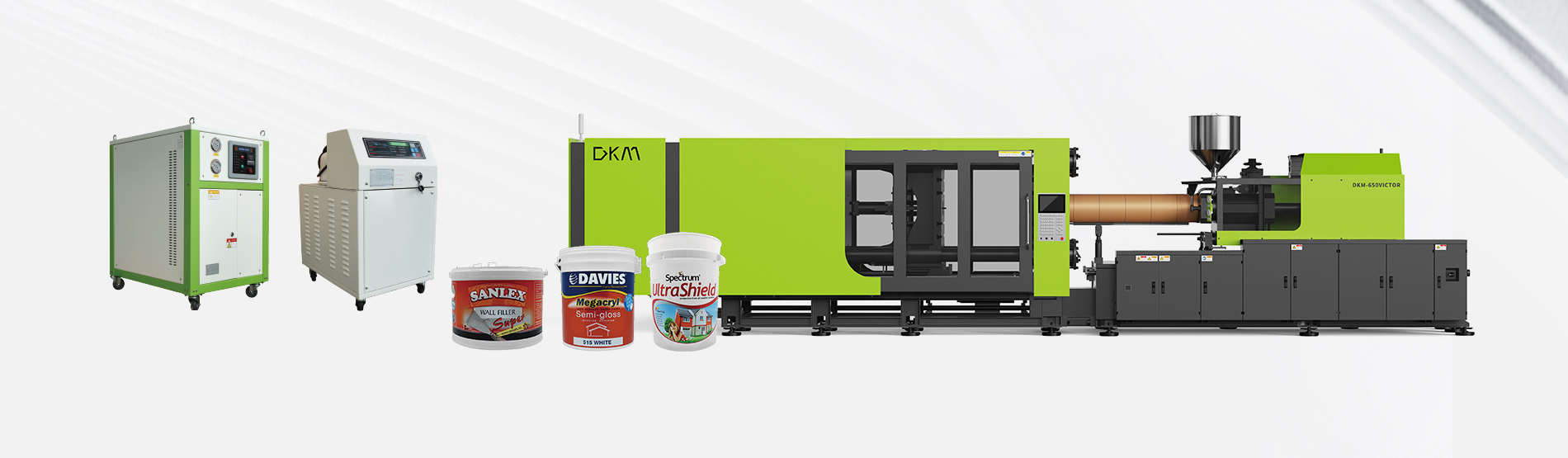
For paint bucket injection molding, the machine must not only be powerful but also agile and precise. In a dedicated 5‑gallon paint pail machine or 20L paint pail production line, we strongly recommend the following features:
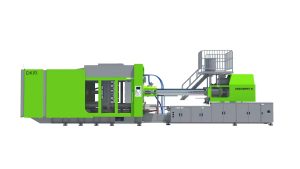
- Clamping and plasticising system: A servo energy‑saving injection molding machine with high‑rigidity platens as the power core. For low‑melt‑flow formulations, a low melt plastic injection molding machine can be used for low‑temperature plasticising to reduce degradation. Meanwhile, a high speed paint bucket machine with a fast‑movement mould structure balances efficiency and precision.
- Metering and clamping accuracy: The machine should be equipped with a high‑response servo valve to accurately execute slow‑speed profiling and pressure switching, controlling bucket mouth weight repeatability within ≤0.3%, preventing flash at the mouth that would ruin the sealing surface.
V. Mould Structure and Cooling Optimisation – Paint Bucket Injection Molding
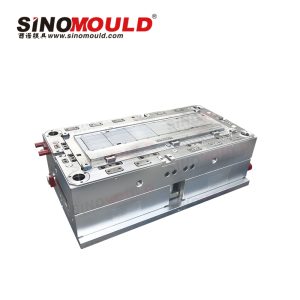
The mould is the first line of defence against deformation and sealing problems. A precision plastic paint bucket mould must include:
- Conformal cooling and hot runner technology: Use 3D‑printed conformal cooling channels around the mouth insert, and introduce a valve gate hot runner mould instead of a cold runner. Valve gates precisely control the melt front, eliminating weld lines and sink marks at the mouth, fundamentally solving sealing risks.
- Venting and ejection mechanisms: Use hydraulic side cores with delayed locking mechanisms on the fixed mould half to prevent pulling and deformation during mould opening. Also, provide ring‑shaped venting grooves at the parting line and apply vacuum suction to eliminate burn marks and micro‑leakage risks caused by trapped gas.
VI. Raw Material Selection and Pre‑treatment – Paint Bucket Injection Molding
Material intrinsic quality is the foundation of successful paint bucket injection molding:
- HDPE selection: Prefer high‑rigidity HDPE with a melt flow index of 3‑6 g/10min and a narrow molecular weight distribution. Its excellent environmental stress‑crack resistance greatly reduces creep‑related seal failure of the bucket mouth under long‑term load.
- Dehumidification drying: Before molding, dry the material in a desiccant dryer (part of paint bucket auxiliary equipment) at 80‑85°C for 1.5‑2 hours to ensure moisture content below 200 ppm, avoiding silver streaks and micro‑porosity caused by moisture vapor.
VII. Bucket Mouth Seal Testing and Quality Control – Paint Bucket Injection Molding
Without rigorous verification, the improvements made in paint bucket injection molding cannot be assured:
- Online air‑tightness test: Immediately after part take‑out by the robot, the test station measures leakage under a pressure of 60‑100 kPa using the pressure‑difference method, with automatic rejection of non‑conforming parts.
- SPC control of key dimensions: Use non‑contact optical inspection to sample and monitor the inner diameter, roundness, and flatness of the bucket mouth. SPC analysis corrects process drift in time, ensuring every bucket perfectly matches the lid sealing ring.