Blog
The Ultimate Guide to Thin-Wall Food Packaging Injection Molding Machines: Speed, Precision & Efficiency
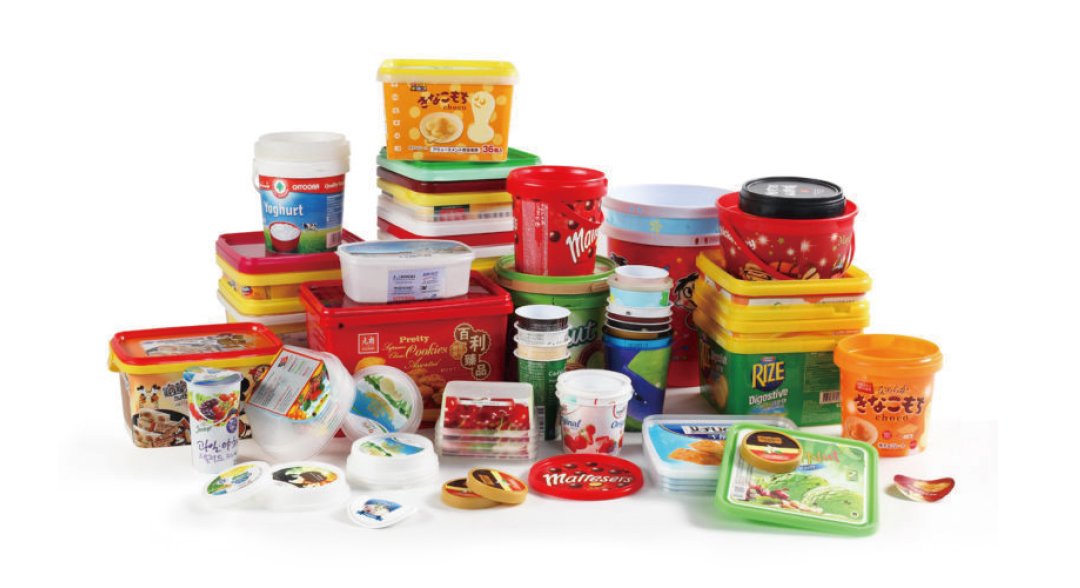
In the fast-paced modern consumer market, thin-wall food packaging such as disposable lunch boxes, milk tea cups, fresh-keeping boxes and bottle caps has become mainstream due to light weight, low cost and easy transportation. Its wall thickness is usually only 0.2–0.5 mm.
The core production challenges lie in high-speed filling, precision molding and high-volume mass production. Ordinary injection molding machines can hardly meet all these requirements, making professional thin-wall food packaging injection molding machines an essential demand in the industry.
Speed: High-Speed Filling & Ultra-Fast Cycle to Win Production Efficiency
Speed is the lifeline of thin-wall injection molding and directly determines production capacity and delivery performance.
1.1 Ultra-high injection speed to solve thin-wall filling difficulties
– Industry standard: ≥300 mm/s; high-end models reach 500–1000 mm/s, even up to 1600 mm/s.
– Technical principle: Thin-wall cavities feature long melt flow paths and extremely thin walls, requiring high speed and high pressure for rapid filling to avoid material shortage, burn marks and weld lines.
– Core configuration: Low-inertia injection unit, servo electric drive, special screw suitable for PP/HDPE/PS, optimized non-return valve.
1.2 Ultra-fast mold clamping & shorter cycle time
– Mold opening/closing speed: ≥400 mm/s, response time ≤0.1 second, stable movement without impact.
– Molding cycle: As low as 1.8–3 seconds for thin-wall lunch boxes and milk tea cups, over 30% faster than conventional injection machines, with daily output reaching hundreds of thousands of pieces.
– Structural support: High-rigidity five-point toggle mechanism, thickened mold plates and low-deformation design to ensure stable operation at high speed.
1.3 Compatibility with high-speed automation to boost overall efficiency
Seamless integration with high-speed robots, IML in-mold labeling, automatic stacking and inspection systems to realize unmanned continuous production.
Precision: Micron-level Control to Ensure Food Safety and Consistency
Food packaging is in direct contact with food, requiring strict standards in dimensional accuracy, uniform wall thickness and hygiene safety. Precision is the core guarantee of product quality.
2.1 Repeat positioning accuracy stable at ±0.01 mm level
– Industry benchmark: Repeat positioning accuracy ≤±0.01 mm, dimensional deviation controlled within ±0.02 mm, yield rate over 99.2%.
– Technical guarantee: All-electric servo drive, high-rigidity machine frame, precision linear guide rail and closed-loop control to eliminate cumulative errors.
2.2 Uniform wall thickness & molding precision to prevent leakage and deformation
– Core requirement: Wall thickness tolerance ≤0.03 mm, ensuring containers no liquid leakage, no warpage and precise fitting of lids.
– Mold matching: High-rigidity mold plate steel (1.2085 / 20Х13), molding insert steel 1.2083 (HRC 28–52) or AISI 304; equipped with DLC coated guide pillars and Hasco graphite guide bushes to maintain stable precision for over 1 million shots.
Efficiency: Energy Saving + Stable Production to Maximize Return on Investment
Efficiency = Output × Yield ÷ Cost. Thin-wall injection molding machines deliver high benefits through energy saving, high durability and low maintenance.
3.1 Energy-saving drive: 30%–50% lower power consumption than traditional hydraulic machines
– All-electric / hybrid design: Servo motor operates on demand without overflow loss, unit energy consumption as low as 0.042 kWh per piece.
– Energy-saving design: Nano infrared heating, barrel heat preservation and low-inertia moving parts further reduce energy consumption.
3.2 High durability: Maintenance-free for over 1 million cycles
– Reinforced structure: Thickened mold plates, high-rigidity frame and wear-resistant key components support 24/7 continuous production.
– Long-service-life accessories: DLC coated guide pillars, Hasco standard components and reinforced screw & barrel reduce maintenance frequency and cost.
3.3 Intelligent efficiency: Digital management to minimize human error
– Intelligent system: 10-inch touch screen, multi-stage injection and plasticization, real-time production data monitoring, cycle counting and self-diagnosis of faults.
Selection Suggestion: Balance Performance and Cost According to Actual Demand
-Speed priority for mass production of lunch boxes & milk tea cups
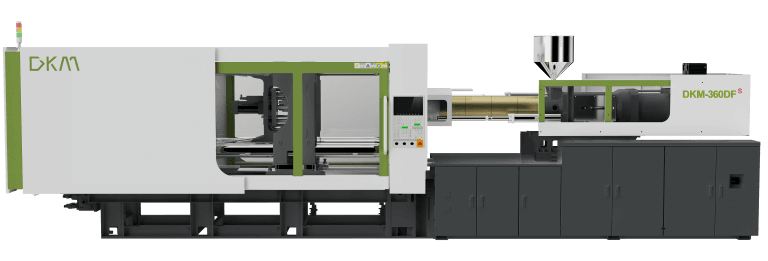
Choose models with injection speed ≥500 mm/s and cycle time ≤3s (DKM DFS high speed machine).
-Precision priority for high-end fresh-keeping boxes & precision caps
Select all-electric models with ±0.01 mm repeat accuracy and cleanroom grade 1000 configuration.
The core value of thin-wall food packaging injection molding machines lies in boosting capacity by speed, ensuring quality by precision, and cutting cost by efficiency, solving industry pain points in one integrated solution.
With consumption upgrading and stricter environmental regulations, lightweight design, high speed, high precision and energy saving have become irreversible trends. Choosing the right professional equipment means choosing long-term market competitiveness.