IML薄壁酸奶杯/奶茶杯:生产要点与质量控制
IML Thin-Walled Yogurt Cups/Milk Tea Cups: Key Production Points and Quality Control In the food packaging field, IML (In-Mold Labeling) thin-wall yogurt and milk tea

With the rapid growth of the new energy vehicle (NEV) industry, lightweighting has become a core driver of the green transformation of automobiles. Micro‑foaming injection molding creates a uniform micro‑cellular structure inside the melt, reducing material density and usage while maintaining mechanical properties. This enables weight reduction, lower energy consumption, and higher efficiency, offering an effective solution for the green manufacturing of automotive interior, exterior, and structural parts. As a representative of physical micro‑foaming technology, MuCell is penetrating various application scenarios of automotive interior components at an unprecedented speed.
The popularity of MuCell micro‑foaming technology is no accident. Its core principle is to inject nitrogen or carbon dioxide, pressurized to a supercritical state, directly into the molten resin. When the melt is injected, the sudden pressure drop creates hundreds of millions of tiny bubbles, forming a unique cellular structure inside the plastic. This process brings remarkable comprehensive advantages:
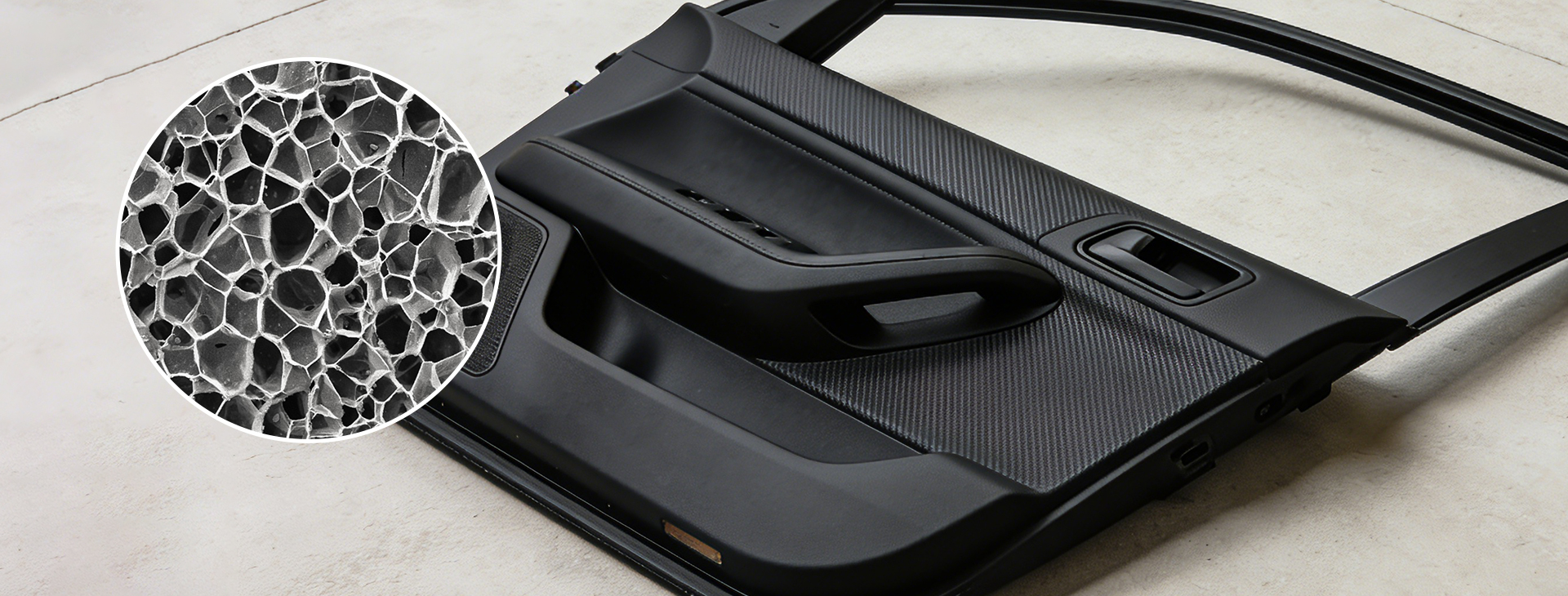
Typically 8–15% weight reduction, and up to 30% when combined with thin‑wall design.
The expansion of bubbles acts as “internal holding pressure”, eliminating the conventional packing phase. The micro‑cellular structure also accelerates cooling, reducing the overall cycle time by 20–30%.
Critical dimensions such as flatness, roundness, and warpage are improved by 50–75%, while all sink marks are eliminated.
Physical foaming leaves no chemical residues, and regrind can be fully recycled.
Because of these advantages, MuCell technology has been widely adopted in automotive, home appliance, medical device, packaging, and many other industries. In particular, it has become a mature and revolutionary technology for the production of high‑precision, high‑performance automotive components.
In the global landscape of micro‑foaming technology, suppliers such as Trexel and Matsui Manufacturing have their own deep technological accumulations. However, DKM, as a researcher and applicator of MuCell micro‑foaming technology, has forged a differentiated path.
DKM’s core differentiation lies in technical service rather than pure equipment supply. DKM not only provides hardware integration solutions for MuCell technology, but also focuses on helping customers achieve true mass‑production breakthroughs. While global leaders like Trexel focus on standardized output of supercritical fluid control systems and cooperate with multiple injection molding machine brands, DKM concentrates on building end‑to‑end application capabilities. Leveraging its deep understanding of local supply chains and manufacturing environments in China and the Asia‑Pacific market, DKM offers more targeted mass‑production solutions for Tier 1 automotive injection molders.
Traditionally, foaming injection molding was limited to non‑visible structural parts because the surface tended to show flow marks and defects. By deeply integrating MuCell micro‑foaming technology with high‑gloss injection molding, DKM has broken this limitation and achieved several key breakthroughs:
1.Solving the surface‑defect problem of MuCell
By precisely controlling mold temperature, injection speed, and the timing of gas nucleation, DKM creates a dense, unfoamed skin layer on the part surface while maintaining a uniform micro‑cellular structure inside. This allows the part to achieve a high‑gloss finish that meets A‑surface quality standards for visible interior components.
2.Solving the “fiber floating” problem of long carbon/long glass fibers
The micro‑foaming process helps improve fiber dispersion and reduces flow‑induced fiber orientation. DKM further optimizes this mechanism: the expansion of bubbles during foaming effectively “encapsulates” the long carbon and long glass fibers inside the material, avoiding the rough surface caused by exposed fibers in conventional injection molding. This enables high‑strength long‑carbon‑fiber reinforced materials to be confidently used for interior part molding.
3.Improving the cost‑effectiveness and efficiency of MuCell micro‑foaming
Through systematic process optimization and service support, DKM makes MuCell injection molding easier, faster, and more efficient, significantly improving yield. Customers can enjoy the benefits of lightweighting and high performance while achieving real economic returns.
New energy vehicles are placing increasingly stringent requirements on structural parts, functional parts, and interior/exterior components. DKM’s MuCell micro‑foaming technology precisely addresses these needs:
With solid technical strength and a pragmatic service spirit, DKM is driving the deep application and continuous evolution of micro‑foaming injection molding technology in the field of automotive interior parts. On the road to pursuing ultimate lightweighting, high performance, and cost competitiveness for new energy vehicles, DKM is undoubtedly a trustworthy technology partner.
IML Thin-Walled Yogurt Cups/Milk Tea Cups: Key Production Points and Quality Control In the food packaging field, IML (In-Mold Labeling) thin-wall yogurt and milk tea
With the continuous growth of global PET packaging demand, especially the increasing requirements for preform production efficiency and quality in food, beverage, cosmetics and other
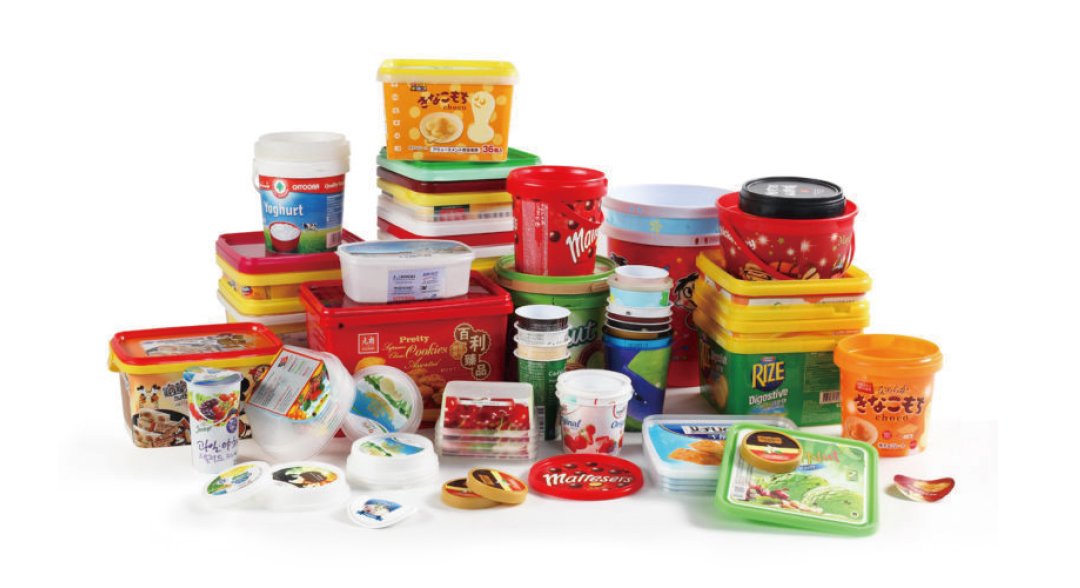
IML In-Mold Labeling: Delivers food-grade safety, integrated appearance, high/low temperature resistance and wear resistance for food packaging containers. Why IML Packaging Is the Top Choice

Injection Molding of Paint Buckets How to Solve Bucket Mouth Deformation and Poor Sealing? In the paint packaging field, the precision and sealing of the